What's Actually in This Triceratops Collection
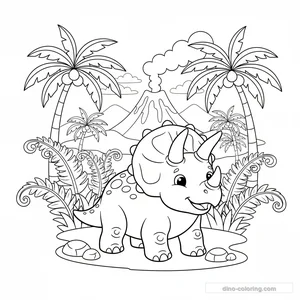
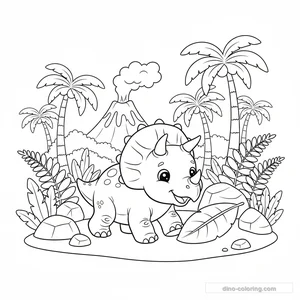
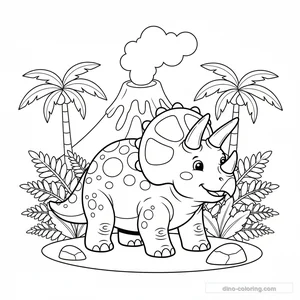
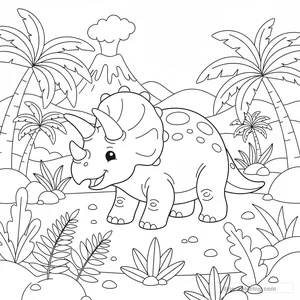
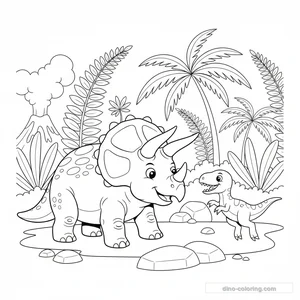
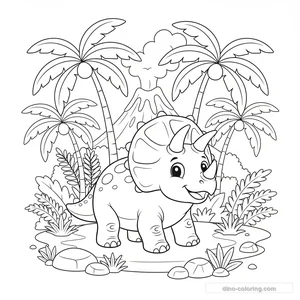
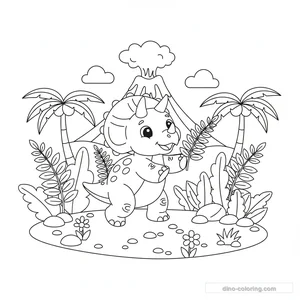
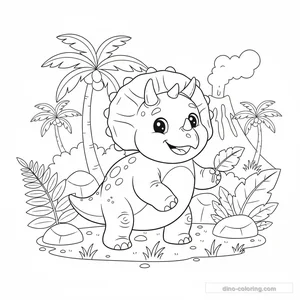
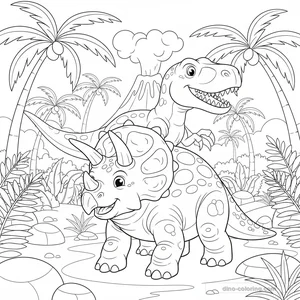
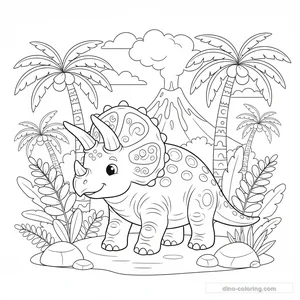
This set brings together 41 Triceratops coloring pages, built as a proper dinosaur coloring pages collection rather than a handful of repeated images. Each sub-theme appears several times, with different lines and backgrounds each time:
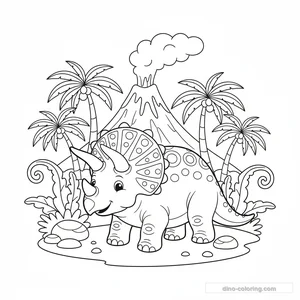
- Detailed Triceratops (7 pages): skin texture, scales, and frill detail for a longer, more precise coloring session.
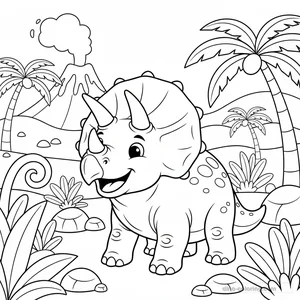
- Smiling Triceratops (6 pages): a friendly, rounded version suited to younger children.
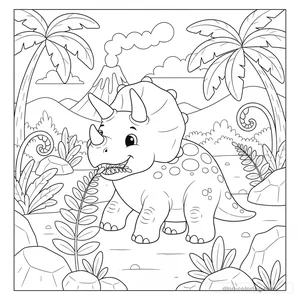
- Herbivore Triceratops (6 pages): the animal shown feeding, head lowered or turned toward a plant.
- Triceratops on the Defense (5 pages): the lowered-head, horns-forward stance typical of the animal facing a threat.
- Three-Horned Triceratops (5 pages): close-up portraits highlighting the two brow horns and the nose horn.
- Prehistoric Triceratops (5 pages): the animal set against ferns and ancient landscapes.
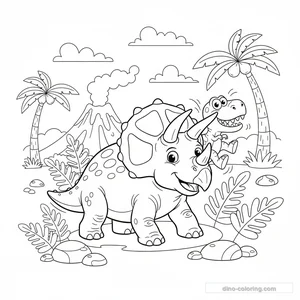
- Playful Baby Triceratops (5 pages): lighter scenes with a young Triceratops in motion.
- Herd of Triceratops (2 pages): several individuals gathered on one sheet.
Who This Collection Works For
With 41 pages spread across eight themes, this collection suits children of quite different ages within the same family or classroom. The Smiling Triceratops and Playful Baby pages work well for younger kids looking for simple shapes and thick outlines to follow. The Detailed and Herd pages demand more patience and precision, and appeal more to 7-10 year-olds already comfortable with a fine marker or colored pencils. Teachers can use the set to vary handouts across a whole unit on herbivorous dinosaurs without repeating the same sheet twice.
How to Approach These Pages, and What to Use
Before coloring, it helps to spot the features that repeat across pages: the bony frill, the three horns, and the body skin. Treating these the same way across several sheets helps a child remember the animal's anatomy instead of starting from scratch each time.
- Colored pencils suit the Detailed pages well, where small areas call for precision.
- Markers fit the Smiling and Playful Baby versions, with their wide, rounded shapes.
- Paint or broad-tip markers work well on the Herd scenes, which are larger and leave room for background work.
Every page is sized for standard printing, so it's easy to print several sheets and build a small coloring book around a single theme.
What Kids Learn About Triceratops
Triceratops lived at the very end of the Cretaceous period, around 68 to 66 million years ago, in North America. It was a herbivore, best known for its large bony frill and its three horns: two long ones above the eyes and a shorter one on the nose. It could grow to roughly 8 to 9 meters long, making it one of the largest horned dinosaurs known. Coloring the Herbivore and Defense pages in this set naturally links a specific pose to real animal behavior — grazing on low plants, or lowering the head and presenting its horns when threatened.
Frequently Asked Questions
Are these Triceratops pages suitable for young children?
Yes. The Smiling Triceratops and Playful Baby Triceratops pages use simple, thick outlines suited to children just starting out with coloring.
Can several pages be printed at once?
Yes, all 41 dinosaur coloring pages are designed to print independently, in black and white, on a standard sheet.
What's the difference between the Detailed and Smiling versions?
The Detailed version adds skin and frill texture with more small areas to fill in, while the Smiling version stays with wide, rounded shapes.
Do these pages show one Triceratops or several?
Most pages show a single animal, except for the two Herd of Triceratops pages, which bring several individuals into the same scene.