CORYTHOSAURUS
Corythosaurus casuarius
Meaning: "Helmet Lizard"
📊 STATS
Size comparison:
About as long as two school buses parked end-to-end!
📖 ABOUT CORYTHOSAURUS
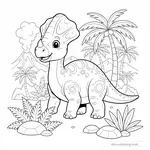
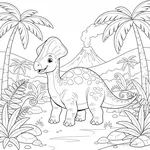
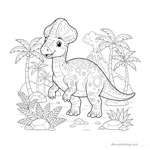
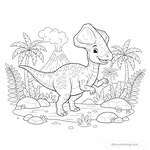
Meet Corythosaurus, the 'Helmet Lizard'! This cool dino had a huge, hollow crest on its head that might have helped it make amazing sounds!
Imagine a dinosaur wearing a giant helmet! That's Corythosaurus! This herbivore, whose name means 'Helmet Lizard,' lived during the Late Cretaceous period. What makes Corythosaurus super special is its impressive crest. Scientists believe this hollow crest wasn't just for show; it probably helped Corythosaurus make loud, booming sounds to communicate with other members of its herd. Think of it like a giant dinosaur trumpet! These sounds could have been used to warn others about danger, attract a mate, or even just to say 'hello!'
Corythosaurus was a plant-eater, munching on leaves, twigs, and other vegetation. It used its beak-like mouth to clip off plants, and its strong jaws to chew them into a pulpy mess. Measuring up to 10 meters long and weighing several tons, Corythosaurus was a pretty big dino! It could walk on two legs or all fours, depending on whether it needed to run away from predators or just graze peacefully. Fossils of Corythosaurus have been found in Canada and the United States, giving us clues about where these amazing creatures once roamed.
🔬 CLASSIFICATION
- Group
- Ornithopoda
- Family
- Hadrosauridae
- Period
- Late Cretaceous (100-66 Ma)
- Era
- 77.0 - 75.0 million years ago
🗺️ DISCOVERY
- Year
- 1914
- Discovered by
- Barnum Brown
- Location
- Alberta, Canada
- Fossils found in
- Canada (Alberta), USA (Montana)
🎨 SCIENTIFIC ILLUSTRATION
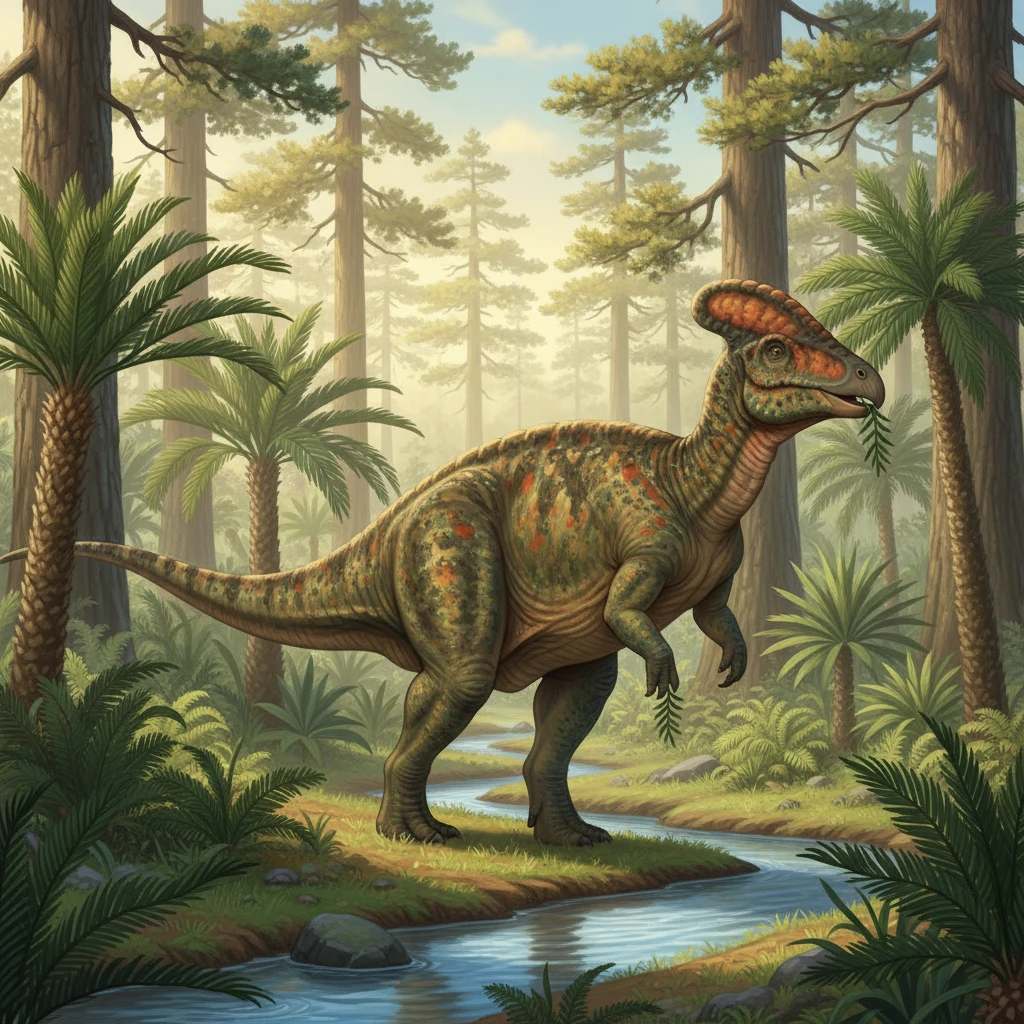
Artistic reconstruction of Corythosaurus based on fossil evidence
🗺️ WHERE FOSSILS WERE FOUND
Canada (Alberta), USA (Montana)
🤓 FUN FACTS
- ✨ Corythosaurus' crest was different in males and females! Scientists think the males had bigger, more elaborate crests.
- ✨ It could run up to 35 kilometers per hour! That's faster than many cars in a school zone!
- ✨ Corythosaurus belonged to a group of dinosaurs called hadrosaurs, also known as duck-billed dinosaurs.
- ✨ Baby Corythosaurus probably didn't have fully developed crests! They grew as the dinosaur got older.
- ✨ The first Corythosaurus fossil was discovered by Barnum Brown in 1914!
💡 DID YOU KNOW?
Get this! Some scientists think Corythosaurus could even make different sounds depending on the shape of its crest! It's like having a built-in musical instrument!