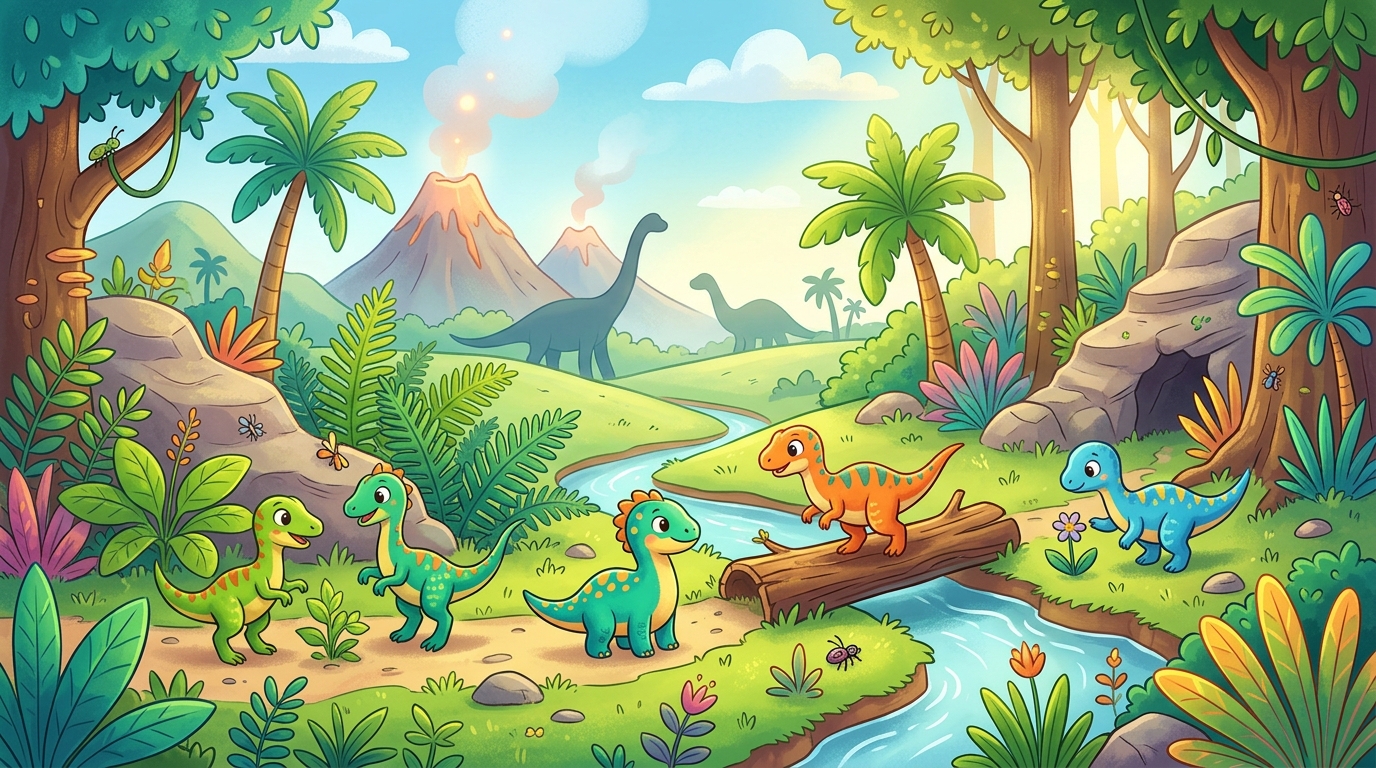
When we think of dinosaurs, we immediately imagine immense titans, imposing T-Rexes, or Diplodocuses scraping the clouds with their long necks. Yet, the prehistoric world was not limited to these giants! There was also a multitude of small dinosaurs for kids, fascinating, agile creatures that were sometimes no bigger than a chicken or a cat. Get your pencils ready, because today, we are setting off to discover the featherweights of Prehistory, those miniature dinosaurs that will spark your imagination.
Giants in Pocket-Sized Bodies: The Secret World of the Tiny
It is time to bust a myth: no, not all dinosaurs weighed as much as a truck! Nature is full of surprises, and for dinosaurs, size was often a matter of adaptation. Some of these small dinosaurs for kids lived in bushes, hunted insects, or squeezed into tight spots to escape more imposing predators.
The Microraptor: The Gliding Ace
Imagine a dinosaur covered in feathers, capable of gliding from tree to tree. That’s the Microraptor! This little jewel of evolution measured only about 70 to 80 centimeters long. With its four wings (yes, it had feathers on its hind legs too!), it looked like a strange, colorful bird. It is one of the most famous small dinosaurs for kids studied by paleontologists.
The Compsognathus: The Jurassic Sprinter
The Compsognathus is often cited as one of the smallest dinosaurs to have ever existed. It measured barely more than a meter long, tail included, and weighed about 3 kilos. It was a very fast predator that ran on its two hind legs. Imagine a lively, intelligent little carnivore, always on the lookout in the undergrowth.
Fun fact: The Compsognathus was so small that it could easily fit into a large picnic basket! Imagine it trying to steal a sausage during your snack time.
Visualizing the Incredible: How Big Are They Really?
For a child, it is sometimes difficult to understand the size of an animal that has been extinct for millions of years. To better grasp these small dinosaurs for kids, let's use concrete points of comparison that you probably have at home!
Comparison with Our Animal Friends
- The Compsognathus: Imagine your pet cat. The Compsognathus was about the same size, but with a long, thin tail and sharp teeth!
- The Microraptor: If you have a large chicken or a big parrot at home, you have a very close idea of the size of this little feathered dinosaur.
- The Mussaurus: Although it became a giant as an adult, the baby Mussaurus (fossils of which have been found) could fit in the palm of a hand!
These comparisons help make these creatures seem less "monstrous" and more real. By understanding that some dinosaurs were quite small, children develop a better grasp of our planet's past biodiversity and the dinosaur facts for kids that make natural history so exciting.
Creative Workshop: The Miniature World in Color
Now that you are experts on these little creatures, it is time to take action. Miniature dinosaur coloring is a perfect activity for working on fine motor skills while having fun. Coloring small details requires patience and precision, two essential qualities for any budding paleontologist.
Tips for Precision Coloring
To succeed with your coloring of small dinosaurs for kids, here are a few pro tips:
- Use well-sharpened colored pencils: For the feathers of the Microraptor or the scales of the Compsognathus, a fine tip is essential.
- Vary the textures: Don't hesitate to use felt-tip pens for the outlines and colored pencils for gradients on the body.
- Be creative: Science doesn't know the exact colors of dinosaurs. Why not imagine an electric blue dinosaur or one with leopard spots?
Coloring Gallery: Grab Your Pencils!
On our site, we have prepared an exclusive selection of printable sheets. You will find scenes featuring these creatures in their natural habitat. Whether they are hunting an insect or resting on a branch, every miniature dinosaur coloring sheet is designed to stimulate your creativity.
Why Are These Small Dinosaurs So Important?
Studying small dinosaurs for kids means understanding that evolution does not always favor brute force. Speed, agility, and stealth were major assets for survival in a world populated by giants. By learning these dinosaur facts for kids, younger ones develop critical thinking and scientific curiosity that will serve them for a lifetime.
Did you know? Many paleontologists believe that modern birds are the direct descendants of small theropod dinosaurs. By feeding the birds in your garden, you might be feeding the grandchildren of the dinosaurs!
Ready to Make Your Pencils Roar?
The world of dinosaurs is vast, and it is not just the giant-toothed monsters that deserve our attention. The small dinosaurs for kids are the quiet heroes of a fascinating era. Whether you are a fan of feathers, speed, or small sizes, there is always a new discovery to be made.
Do you want to start the adventure right now? Head over to our dedicated section to download our miniature dinosaur coloring sheets for free. Print them out, take out your most beautiful colors, and bring these incredible pocket-sized creatures to life. Don't forget to share your masterpieces with us! Happy exploring and happy coloring, budding paleontologists!