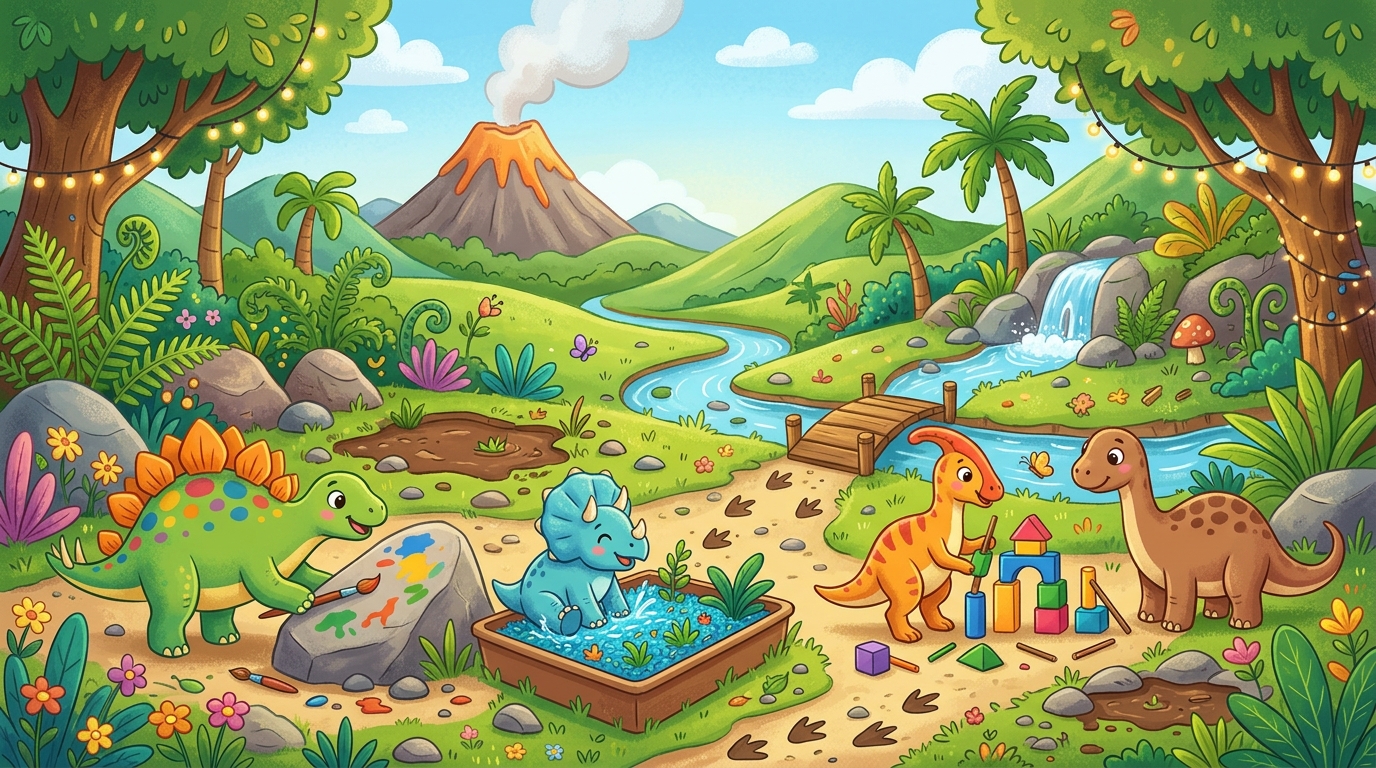
Roar! Transform Your Living Room into a True Jurassic Era
Have you ever dreamed of traveling back in time without leaving your living room? It’s time to trade screens for a thrilling tactile adventure! Creating a miniature dinosaur world is much more than just a craft project: it’s a full-scale scientific expedition right at your fingertips. By combining the magic of coloring with the richness of natural textures, you offer your children an unforgettable immersive experience.
Imagine this: cardboard volcanoes looming over plains of colored sand, paper ferns trembling as a papier-mâché T-Rex passes by… This is the concept of a "Small World," an educational approach that stimulates imagination, refines fine motor skills, and turns a rainy afternoon into a prehistoric epic. Ready to grab your markers and bins? Fasten your seatbelts, we’re heading to the Mesozoic!
Why Mixing Coloring and Sensory Bins is a Brain-Boosting Cocktail
You might be wondering why you should pair dinosaur sensory activities with something as simple as coloring? The answer lies in the synergy between visual creativity and tactile exploration. When a child colors their own Triceratops, they take ownership of the animal, giving it a personality and a unique identity. By then integrating this drawing into a physical environment, they move from abstraction to reality.
Cognitive Development Through Play
Dinosaur sensory bins are fantastic tools for brain development. By manipulating different textures—the grit of sand, the softness of moss, or the roughness of bark—the child develops their sensory capabilities. Here is why this method is so effective:
- Improved Concentration: Coloring requires precision that prepares children for more complex tasks.
- Development of Fine Motor Skills: Cutting out your own 3D dinosaur coloring pages strengthens hand-eye coordination and precision.
- Language and Storytelling: By creating a world, children invent stories, enrich their vocabulary, and learn to structure their thoughts.
- Emotional Regulation: Sensory play is soothing. Touching natural materials helps regulate stress and promotes a state of mindfulness.
Did you know? The Stegosaurus had a brain the size of a walnut, even though its body weighed as much as a car! Fortunately, your little explorers show much greater intelligence by building their own universe.
Crafting Your Own Decor: When Paper Comes to Life
To bring your miniature dinosaur world to life, you don't need to be a professional artist. It all starts with a sheet of paper. The idea is to create decorative elements that aren't just placed on the bin, but become true actors in the scene.
Tips for Successful 3D Coloring
To turn your drawings into sturdy decorative elements, here are some pro tips:
- Weight Matters: Use cardstock (160g or heavier) for your coloring. This will help the figures stand up more easily.
- The Tab Technique: To help your dinosaur stand, draw a small rectangular tab under its feet before cutting. Fold it at a 90-degree angle and secure it to a small cardboard base.
- Natural Varnish: To make your coloring projects resistant to the moisture of the sensory bin (if using damp soil, for example), brush a thin layer of diluted white glue over the drawing once finished. This will create a shiny, protective seal.
Step-by-Step Guide: Creating a Themed Sensory Bin
Now that your creatures are ready, let’s move on to building their habitat. Creating a miniature dinosaur world requires a bit of preparation, but the result is spectacular.
Steps for an Immersive Bin
- Choose the Container: A clear plastic bin or a large wooden crate will work perfectly.
- The Base (The Ground): Use fine sand for a desert, brown lentils or potting soil for an ancient forest, or even green-dyed rice to simulate lush vegetation.
- The Vegetation: Arrange branches collected from the forest, paper-cut leaves, or plastic succulents.
- Integrating the Coloring: Place your paper dinosaurs in different areas of the bin. Create zones: the volcano corner, the river (using crumpled blue paper), and the herbivore clearing.
Fun fact: The T-Rex likely couldn't run very fast despite its impressive size. It preferred to walk with a heavy, steady gait. You can create paths with pebbles in your bin to mark its tracks!
5 Roleplay Ideas to Bring Your Paper Dinosaurs to Life
Once the set is ready, it's time for adventure! Here are a few scenarios to liven up your dinosaur sensory activities:
- The Volcano Eruption: Hide a small container under the sand in the center of the bin. Pour in baking soda and colored vinegar for a spectacular, safe eruption!
- The Archaeological Dig: Hide small "bones" (or dinosaur-shaped pasta) under the "ground" and ask your child to carefully unearth them using a paintbrush.
- The Great Gathering: Organize a dinosaur council to decide where to find the best water source in the bin.
- The Migration: Have your figurines cross the entire bin, avoiding "dangerous" areas (like patches of soft sand or unstable rocks).
- Giant Hide-and-Seek: A parent hides a dinosaur in the decor, and the child must find it using only their hands, without looking, to guess which dinosaur it is.
Ready to Explore the Age of Giants?
Creating a miniature dinosaur world is an adventure that never truly ends. Every day, you can change the layout, add new coloring pages, or modify the texture of the soil to renew your children's interest. It is a gateway to creativity, patience, and wonder.
We know you’re eager to start! To help you with this creation, we have prepared an exclusive collection of 3D dinosaur coloring pages to print for free. Whether it's a fierce carnivore or a peaceful long-necked giant, you’ll find everything you need to populate your sensory bin. Download our templates now, grab your crayons, and share your incredible creations with our community of budding little paleontologists!